
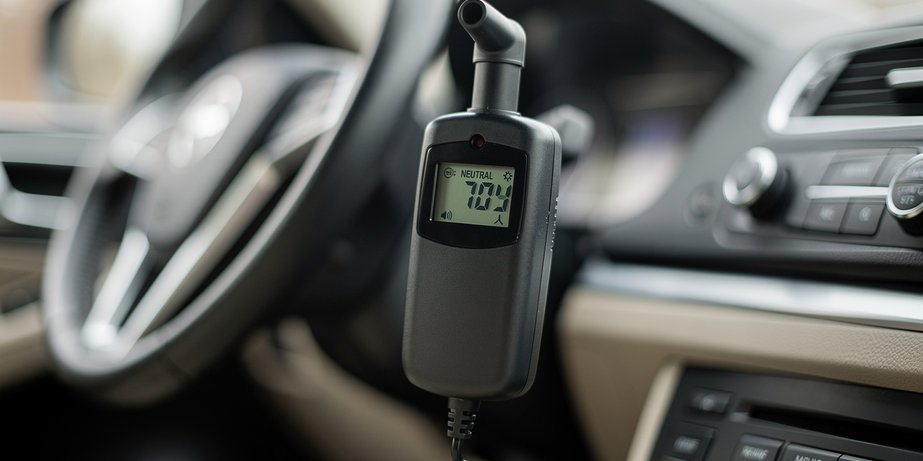
A driver resolving a second DUI is told he will need an ignition interlock device, and he goes looking for the rule online. What he finds is article after article citing Florida Statute 316.1937, which says a court “may” require one. He concludes it is discretionary and that his lawyer can argue him out of it. He is reading the wrong statute. Here’s where Florida’s mandatory interlock provisions actually live, when a court must order a device rather than merely may, and what triggers the longer periods.
Two Statutes, Different Jobs
Florida has two provisions addressing ignition interlock devices, and conflating them is the most common error in this area.
Florida Statute 316.1937 is the general authority. It permits a court to require that a person convicted of DUI not operate a vehicle unless it is equipped with a functioning device, and it sets out the administrative machinery once a device is ordered, including what the court must put on the record, proof of installation, and the consequences for tampering.
Florida Statute 316.193, the DUI statute itself, is where the mandatory requirements sit. The provisions directing that a court shall order placement of a device, and for how long, are attached to the penalty subsections there.
That is why a reader who stops at 316.1937 comes away with the wrong impression. The permissive language is real, and it is not the operative rule for someone with a prior conviction or an aggravated case.
When a Device Is Mandatory
The requirement attaches at defined points, and the periods are stated as minimums.
On a second conviction, the DUI statute directs mandatory placement of an approved device for a period of at least one year, at the convicted person’s sole expense, on all vehicles individually or jointly leased or owned and routinely operated by that person, once they qualify for a permanent or restricted license.
On a third conviction occurring within ten years of a prior conviction, the statute directs mandatory placement for a period of not less than two years. Where a third conviction occurs more than ten years after a prior, the statute still directs mandatory placement for at least two years, even though that offense is graded differently.
The phrase about vehicles routinely operated matters more than people expect. The requirement is not limited to one car, and a household with several vehicles the person drives can face several installations.
What Triggers the Longer First-Offense Period
A first offense does not automatically carry a mandatory device. Two circumstances change that.
Where a person had a blood or breath alcohol level of 0.15 or higher, or was accompanied in the vehicle at the time of the offense by a person under the age of eighteen, the enhanced penalty provisions apply.
In those cases the statute directs mandatory placement of a device for not less than six continuous months on a first offense, and for not less than two continuous years on a second offense.
So a first-time offender who blew 0.15 or who had a child in the car is in a different category from an ordinary first offense, and the device is not negotiable.
The Permissive Middle Ground
There is also a discretionary provision worth knowing. Where a person had a blood or breath alcohol level of 0.08 or higher at the time of the offense, a court may order placement of a device for at least six continuous months even on a case that does not otherwise require it.
That matters at sentencing, because it means a device can appear in a resolution that nobody expected to include one.
How the Device Works
The practical mechanics surprise people, and understanding them before installation prevents avoidable violations.
The device prevents the vehicle from starting if it detects alcohol above a set threshold, which Florida law specifies at a level well below the legal driving limit. Mouthwash, certain foods, and residual alcohol can produce a reading, which is why users are advised to rinse with water and wait before testing.
Devices also require rolling retests while driving. A missed or failed retest is logged. The device does not shut off a moving vehicle, but it records the event and typically triggers an alarm until the vehicle is turned off.
Every event is recorded and reported. Failed starts, missed retests, tampering attempts, and power interruptions all appear in a log that goes to the state, and a pattern of violations can extend the required period or produce further consequences.
Cost and the Employment Exception
The statute places the cost on the convicted person, and it is ongoing rather than a single installation fee, with monitoring and calibration charges recurring throughout the period.
There is one narrow exception to the installation requirement. Where a person must operate a vehicle in the course and scope of employment and that vehicle is owned or leased by the employer, the person may operate it without a device installed, provided the employer has been notified and proof of that notification is kept with the vehicle.
That exception does not apply where the business entity owning the vehicle is itself owned or controlled by the person whose license is restricted, which closes the obvious workaround.
Tampering Is Its Own Problem
Florida law makes it unlawful to tamper with or circumvent a court-ordered device, to ask someone else to blow into it, to blow into it for a restricted driver, or to knowingly lend a vehicle to a restricted driver where the vehicle lacks a device.
People treat asking a friend to start the car as a minor shortcut. It is a distinct violation, it is logged by the device, and it jeopardizes the driving privilege the person was trying to preserve.
Getting the Period Right at Sentencing
Because the statutory periods are minimums tied to specific findings, what the record reflects at sentencing determines what the person lives with afterward. Whether a prior conviction falls inside or outside the ten-year window, and whether the enhanced provisions apply, are questions worth resolving carefully rather than accepting as stated.
Working through which provision actually governs a particular case, rather than the one the search results surface, is part of what our team at Reynoso Erickson Trial Law does on a DUI resolution.